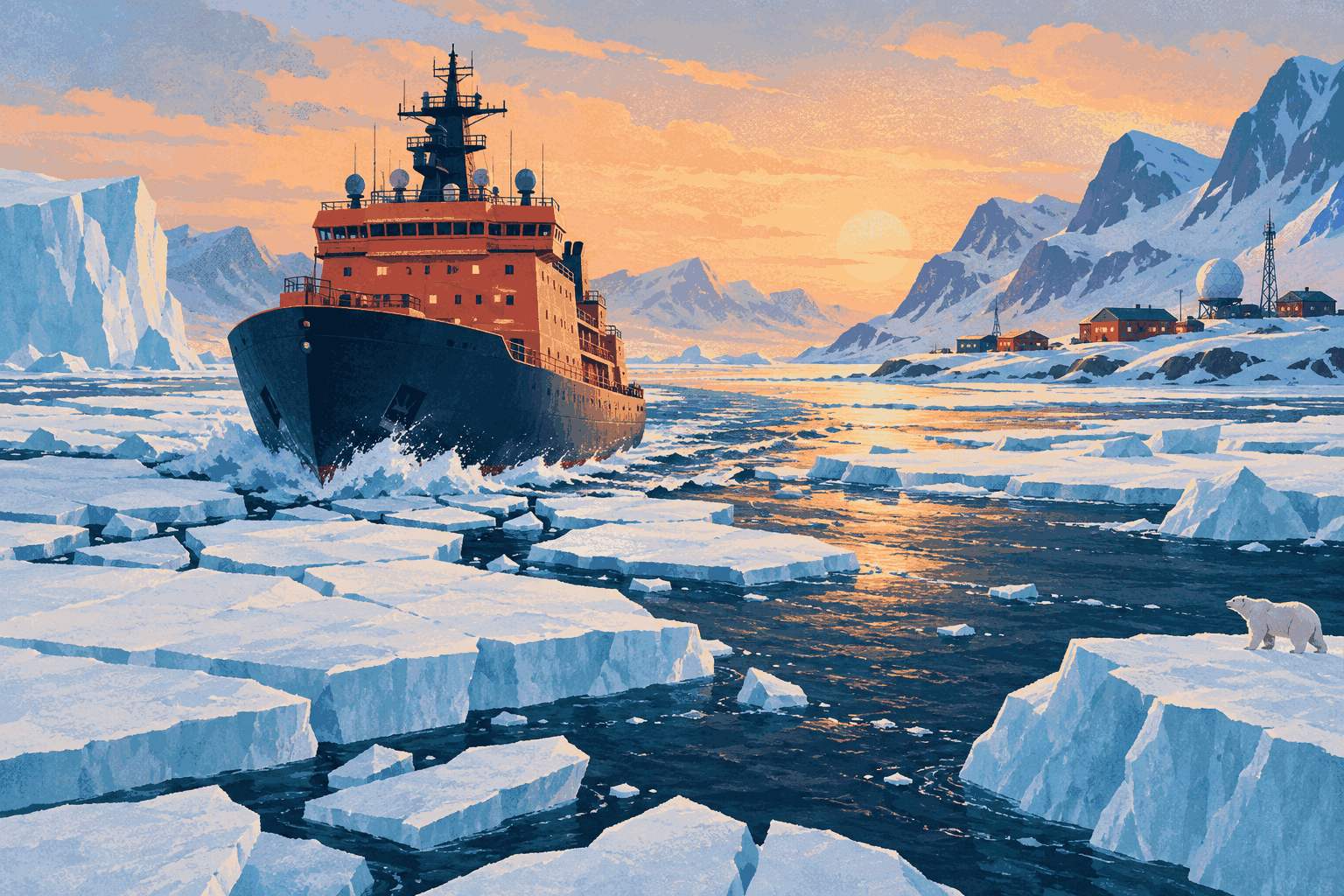
Arctic geography matters for defence, resources and transport. Reduced sea ice can change access, but harsh weather, costs and environmental risks still limit activity. Competition takes place alongside cooperation on science and safety. The region is inhabited, so decisions also concern rights, livelihoods and local priorities. military planners care about the far north is negotiated by governments, organised groups and populations with different security, economic and political constraints.
Reading confidence0% of the way to explored
The deeper explanation
The answer in detail
Polar geography connects major powers by air and sea and provides operating areas for submarines, surveillance and early warning. Bases and infrastructure can support both civilian and military activity. These longstanding security interests are related to, but not simply caused by, recent changes in sea ice.
Why it matters
Arctic choices affect local communities first, while also influencing ecosystems, transport and security. Maps showing apparently empty territory can conceal the people and institutions already there.
The power network behind military planners care about the far north
Alliances, trade routes, finance and information flows change the leverage available to each actor, so a local move can alter choices far beyond the original dispute.
Domestic politics and public budgets set the room for manoeuvre: leaders must convert external pressure into policies that people, institutions and markets will bear.
System lens
What makes this more complicated?
Three layers that help explain what changes the outcome.
Starting conditions
Earlier decisions, alliances and unequal leverage set the starting position before the visible dispute unfolds.
Limits and trade-offs
Rules, capacity and competing priorities limit which responses are practical, even when several options look possible.
Choices and distribution
The outcome depends on who can change those conditions and how its consequences are shared.
Why are countries competing over the Arctic?
Shared background, people, references and other questions for this story collection.
Read the main storyMeet the players
Countries are competing over the Arctic due to its strategic significance and resource potential.
organization
Arctic Council
International forum for Arctic governance
Wants toto promote cooperation and sustainable development in the Arctic region.
LeverageInfluences policy and cooperative efforts among Arctic nations.
Read profile: Arctic Council
The Arctic Council facilitates cooperation among Arctic states on issues such as environmental protection and sustainable development. It excludes military security from its mandate, focusing instead on shared practical problems like pollution and research. The Council's decisions impact how countries engage with each other in the Arctic, balancing competition with collaboration.
organization
United Nations Convention on the Law of the Sea (UNCLOS)
Framework for maritime rights and territorial claims
Wants toto establish guidelines for the use of the world's oceans and their resources.
LeverageDetermines the legal basis for territorial claims and resource rights.
Read profile: United Nations Convention on the Law of the Sea (UNCLOS)
UNCLOS provides the legal framework for determining maritime rights in the Arctic, including territorial seas and economic zones. It governs claims to extended continental shelves, which are crucial for resource extraction. The Convention's rules shape the interactions between Arctic states as they assert their rights over maritime areas.
organization
International Maritime Organization (IMO)
Regulates shipping safety and environmental protection
Wants toto ensure safe and environmentally sound shipping in polar waters.
LeverageSets safety and environmental standards for Arctic shipping.
Read profile: International Maritime Organization (IMO)
The IMO develops regulations such as the Polar Code, which addresses safety and environmental risks associated with Arctic shipping. This organization establishes operational standards for vessels navigating the Arctic, balancing commercial interests with environmental protection.
group
Indigenous Peoples of the Arctic
Local communities affected by Arctic policies
Wants toto protect their rights, livelihoods, and cultural heritage in the face of external pressures.
LeverageInfluences local priorities and rights in Arctic governance.
Read profile: Indigenous Peoples of the Arctic
Indigenous Peoples in the Arctic have distinct rights and institutions that are impacted by decisions regarding infrastructure and resource extraction. Their participation in decision-making processes is essential to ensure that their needs and perspectives are respected, as they face significant consequences from environmental changes and external competition.
government
National Governments of Arctic States
Sovereign authorities asserting territorial claims
Wants toto secure national interests in the Arctic, including defense, resources, and shipping routes.
LeverageControls territorial claims and resource management in the Arctic.
Read profile: National Governments of Arctic States
The national governments of Arctic states, including Canada, Russia, and the United States, are actively involved in asserting territorial claims and managing resources in the region. Their military and economic strategies are influenced by the changing Arctic environment, which presents both opportunities and challenges for national security and resource management.
Sources & visual credits
Flags and logos identify the actors; they do not imply endorsement.
Story collection
6 questions to explore
Open a question to read its explainer and follow the linked questions in this collection.
A quick glossary for this collection.
ArcticThe northern polar region, defined in different ways for different purposes.
Sea iceFrozen seawater floating on the ocean.
PermafrostGround that remains frozen for at least two consecutive years.
Polar CodeIMO rules addressing ships in polar waters.
IcebreakerA vessel designed to navigate through ice.
Continental shelfSeabed and subsoil subject to specified coastal-state rights.
Sources for the whole story
How we work ↗Sources to start with
These references support the story collection as a whole.
Take the question with you
Visit the shop →Make complex ideas conversation starters.
Explore humorous products inspired by stories such as Why are countries competing over the Arctic?.