Borders determine who governs land, collects taxes and controls resources. A disputed line can also carry memories of displacement or national identity. When governments treat compromise as a loss of security or legitimacy, even a small territory can become difficult to negotiate. borders cause so many disputes is negotiated by governments, organised groups and populations with different security, economic and political constraints.
Reading confidence0% of the way to explored
GeopoliticsGlobalCounting reads…
Why do borders cause so many disputes?
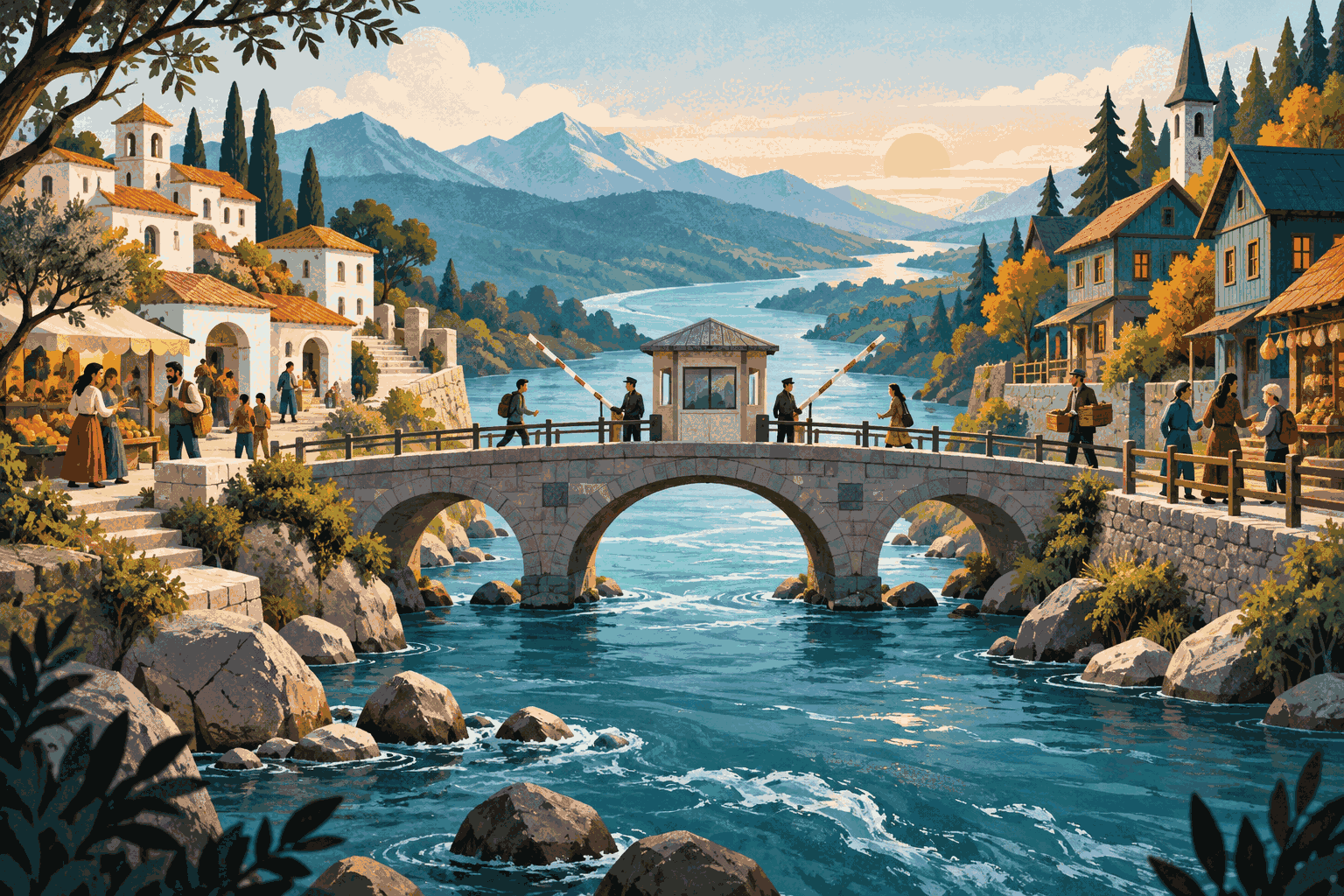
A border marks where one country’s authority ends and another’s begins—but people, rivers, resources and historical claims rarely fit neatly inside those lines. Understanding a border dispute means looking at both the territory and what it represents.
Complex · 10 min read
The deeper explanation
Borders determine who governs land, collects taxes and controls resources. A disputed line can also carry memories of displacement or national identity. When governments treat compromise as a loss of security or legitimacy, even a small territory can become difficult to negotiate.
The immediate chain is specific to Why do borders cause so many disputes? : Borders determine who governs land, collects taxes and controls resources. A disputed line can also carry memories of displacement or national identity. When governments treat compromise as a loss of security or legitimacy, even a small territory can become difficult to negotiate. Borders emerged through treaties, wars, colonial administration, independence and the breakup of states. Some follow natural features; others reflect negotiated or inherited boundaries. Their origins explain present tensions but do not, by themselves, establish which current claim is legally valid. They can agree on joint development, shared administration or temporary access arrangements while reserving their legal positions. Such deals require precise rules for revenue, policing and dispute resolution. They can reduce immediate friction, but a change in politics may revive the underlying sovereignty dispute.
The system is constrained by the conditions described in the story. A border marks where one country’s authority ends and another’s begins—but people, rivers, resources and historical claims rarely fit neatly inside those lines. Understanding a border dispute means looking at both the territory and what it represents. The outcome depends on which pressures are strongest, which resources are available and how the people or institutions involved respond.
The situation can change when the relevant actors alter their behaviour, when a key resource becomes scarce or available, or when a rule changes who can act and at what cost.
The consequences extend beyond the immediate question. Border rules shape travel, jobs, transport costs and access to resources. A settlement that overlooks local communities can leave practical problems even after governments agree on a map.
A systems view makes the longer mechanism visible: Starting conditions: Earlier decisions, alliances and unequal leverage set the starting position before the visible dispute unfolds. Limits and trade-offs: Rules, capacity and competing priorities limit which responses are practical, even when several options look possible. Choices and distribution: The outcome depends on who can change those conditions and how its consequences are shared.
For Why do borders cause so many disputes?, the practical outcome turns on Starting conditions, Limits and trade-offs, Choices and distribution. Those details determine what each participant can do next and how the result changes over time. The visible outcome is therefore the end of a chain: a decision changes access to a resource, that change alters behaviour, and the new behaviour affects the next decision.
Why it matters
Border rules shape travel, jobs, transport costs and access to resources. A settlement that overlooks local communities can leave practical problems even after governments agree on a map.
The power network behind borders cause so many disputes
Alliances, trade routes, finance and information flows change the leverage available to each actor, so a local move can alter choices far beyond the original dispute.
Domestic politics and public budgets set the room for manoeuvre: leaders must convert external pressure into policies that people, institutions and markets will bear.
Story collection
6 questions to explore
Open a question to read its explainer and follow the linked questions in this collection.
Meet the players
Borders often lead to disputes due to their implications for governance and identity.
organization
International Court of Justice
Arbiter of legal disputes
Wants toto resolve legal disputes between states based on consent.
LeverageThe ICJ's authority can lend legitimacy to border claims but requires cooperation from disputing nations for enforcement.
Read profile: International Court of Justice
The International Court of Justice (ICJ) adjudicates legal disputes between states, relying on their consent for jurisdiction. It interprets international law and provides rulings that can influence border negotiations. However, the implementation of its decisions depends on the willingness of the involved parties to comply.
group
Coastal States
Claimants of maritime boundaries
Wants toto assert rights over territorial seas and exclusive economic zones.
LeverageTheir geographical position and resource claims can create significant leverage in negotiations over maritime boundaries.
Read profile: Coastal States
Coastal states assert various rights over their territorial seas and exclusive economic zones, leading to overlapping claims with neighboring countries. The shape of coastlines and the presence of islands can complicate these claims, making negotiations essential for resource management and maritime governance.
organization
European Union
Facilitator of cross-border agreements
Wants toto promote cooperation and manage border-related issues among member states.
LeverageThe EU's regulatory frameworks and funding can incentivize cooperation and support for local communities affected by border disputes.
Read profile: European Union
The European Union facilitates agreements between member states to manage border issues and promote cross-border cooperation. It provides frameworks for local communities affected by borders, ensuring that their needs are considered in negotiations. The EU's policies can ease tensions and improve relations between neighboring countries.
organization
United Nations
Mediator in international disputes
Wants toto promote peace and security through conflict resolution.
LeverageThe UN's global authority and resources can support conflict resolution efforts and provide frameworks for international cooperation.
Read profile: United Nations
The United Nations engages in mediating border disputes and promoting peaceful resolutions. It provides platforms for dialogue and negotiation, encouraging states to resolve conflicts amicably. The UN's involvement can lend legitimacy to the negotiation process and facilitate the implementation of agreements.
organization
International Treaties
Framework for border establishment
Wants toto provide legal frameworks for border definitions.
LeverageThe legal authority of treaties can be invoked in negotiations, but their interpretation can lead to disputes.
Read profile: International Treaties
International treaties, such as those resulting from colonial administrations or post-war agreements, establish the legal basis for many national borders. These treaties can be sources of contention, as differing interpretations may lead to disputes. Understanding their historical context is crucial for resolving current tensions.
Sources & visual credits
Flags and logos identify the actors; they do not imply endorsement.
System lens
What makes this more complicated?
Three layers that help explain what changes the outcome.
Starting conditions
Earlier decisions, alliances and unequal leverage set the starting position before the visible dispute unfolds.
Limits and trade-offs
Rules, capacity and competing priorities limit which responses are practical, even when several options look possible.
Choices and distribution
The outcome depends on who can change those conditions and how its consequences are shared.
What happens next?
Too uncertain to forecast responsibly
Explore the topic
Try a complex prompt
Use this question to continue the explanation at the depth you selected.
Analyse this story through institutions, bargaining power, domestic politics and interdependence. Compare alternative explanations and identify evidence that would change your assessment. Avoid treating scenarios as predictions.
10 essential words
SovereigntyAuthority exercised by a state over its territory.
BoundaryA limit between areas of jurisdiction.
DelimitationDefining a boundary in law or an agreement.
DemarcationMarking a boundary on the ground.
Territorial seaCoastal waters subject to sovereignty, with passage rights under international law.
Exclusive economic zoneA maritime zone with specified resource and economic rights.
Continental shelfSeabed and subsoil over which a coastal state has specified rights.
ArbitrationA binding decision by a tribunal accepted by the parties.
MediationAssistance from a third party in reaching agreement.
Joint developmentAn arrangement to cooperate over resources without necessarily settling ownership.
Editorial transparency
What is established, interpreted and still open?
The institutional rules and mechanisms described here are documented in the linked sources.
Historical narratives, treaty interpretation and the willingness to implement agreements differ between disputes.
The connections and trade-offs are an explanatory synthesis; different analysts may weigh them differently.
This is a background explainer. The scenarios described are possibilities, not predictions.
Evidence behind the explanation
How we work ↗Sources to start with
These references anchor the key facts and give you a path to explore further.
One quick check, then keep exploring.
Question 1 of 3
Why do borders cause so many disputes?
Take the question with you
Visit the shop →Make complex ideas conversation starters.
Explore humorous products inspired by stories such as Why do borders cause so many disputes?.
Understand the next story
One clear briefing, every week.
Three topics worth understanding, without the noise.
Next explanation
Explore next →