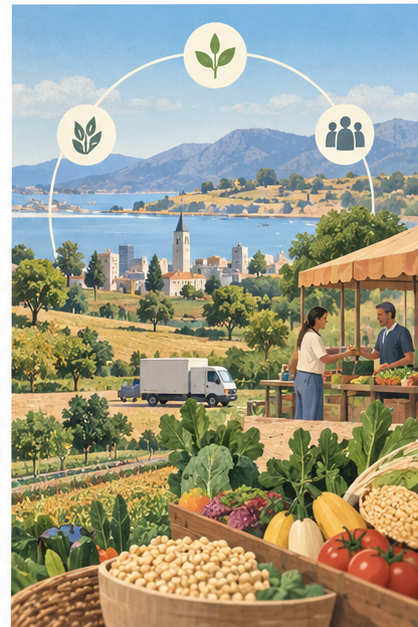
Heat, water stress and extreme weather can reduce yields and livestock productivity. This makes food systems become more resilient depend on land use, weather and the infrastructure that stores and moves the resource.
Reading confidence0% of the way to explored
The deeper explanation
The answer in detail
How can food systems become more resilient? is shaped by the forces, choices and constraints described in this collection. Diversification, better practices, social protection and resilient infrastructure reduce risk.
Why it matters
Climate-related food disruption affects nutrition, inflation, livelihoods, migration and political stability.
The wider system behind food systems become more resilient
Farms, cities, households and ecosystems draw on the same resource, so decisions about food systems become more resilient redistribute access, prices and risk between users.
Insurance, public budgets and trade carry the effects beyond the immediate place: a local shortage or adaptation choice can change food prices, health costs and investment elsewhere.
System lens
What makes this more complicated?
Three layers that help explain what changes the outcome.
Starting conditions
History, resources and institutional capacity set the starting position before the visible outcome appears.
Limits and trade-offs
Rules, capacity and competing priorities limit which responses are practical, even when several options look possible.
Choices and distribution
The outcome depends on who can change those conditions and how its consequences are shared.
Why does climate change make food security harder?
Shared background, people, references and other questions for this story collection.
Read the main storyMeet the players
Climate change complicates food security by impacting harvests and economic stability.
organization
Intergovernmental Panel on Climate Change (IPCC)
Research and assessment of climate impacts
Wants toto provide scientific assessments on climate change and its effects on food security.
LeverageInfluences global climate policy and agricultural practices through scientific assessments.
Read profile: Intergovernmental Panel on Climate Change (IPCC)
The IPCC conducts comprehensive assessments of climate change, including its impact on agriculture and food security. Their reports inform policymakers and stakeholders about the risks associated with climate-related disruptions to food systems. By highlighting the consequences of heat, drought, and extreme weather, the IPCC aims to guide adaptation strategies in agriculture.
organization
Food and Agriculture Organization (FAO)
Monitoring food security and nutrition
Wants toto enhance food security and nutrition through sustainable agricultural practices.
LeverageShapes international food security policies and practices through research and advocacy.
Read profile: Food and Agriculture Organization (FAO)
The FAO monitors global food security and nutrition, providing data and analysis on the impacts of climate change on food systems. Their initiatives focus on improving agricultural resilience and ensuring access to food, particularly in vulnerable regions. The FAO's work is crucial for understanding how climate-related factors affect food prices and availability.
organization
World Bank
Funding and research on food security
Wants toto reduce poverty and support sustainable food systems in the face of climate change.
LeverageProvides financial resources and expertise to support agricultural adaptation and resilience.
Read profile: World Bank
The World Bank conducts research on food security, focusing on the economic impacts of climate change on agriculture. They provide funding for projects aimed at enhancing resilience in food systems, particularly in developing countries. Their insights help shape policies that address the intersection of climate change and food security.
group
Farmers
Implementing agricultural practices
Wants toto adapt farming practices to changing climate conditions and maintain productivity.
LeverageInfluence local food production and market stability through their agricultural choices.
Read profile: Farmers
Farmers are directly affected by climate change, facing challenges such as heat stress, droughts, and floods that threaten crop yields. They adapt agricultural practices to enhance resilience against climate impacts. Their decisions on crop diversification and sustainable practices are essential for food security.
organization
United Nations Framework Convention on Climate Change (UNFCCC)
International climate policy framework
Wants toto facilitate global cooperation on climate change mitigation and adaptation.
LeverageShapes international climate agreements and funding mechanisms for adaptation.
Read profile: United Nations Framework Convention on Climate Change (UNFCCC)
The UNFCCC provides a platform for countries to negotiate and implement climate policies that address food security challenges. By promoting international agreements, the UNFCCC helps nations coordinate efforts to adapt agricultural practices to climate change impacts. Their work is vital for fostering global collaboration on food security in the context of climate change.
Sources & visual credits
Flags and logos identify the actors; they do not imply endorsement.
Story collection
6 questions to explore
Open a question to read its explainer and follow the linked questions in this collection.
A quick glossary for this collection.
Food securityReliable access to enough safe and nutritious food.
Crop yieldThe amount of crop produced per unit of land.
DroughtA prolonged period of unusually low water availability.
Heat stressDamage caused when temperatures exceed biological tolerance.
PestAn organism that harms crops or livestock.
IrrigationArtificial delivery of water to crops.
Sources for the whole story
How we work ↗Sources to start with
These references support the story collection as a whole.
Take the question with you
Visit the shop →Make complex ideas conversation starters.
Explore humorous products inspired by stories such as Why does climate change make food security harder?.