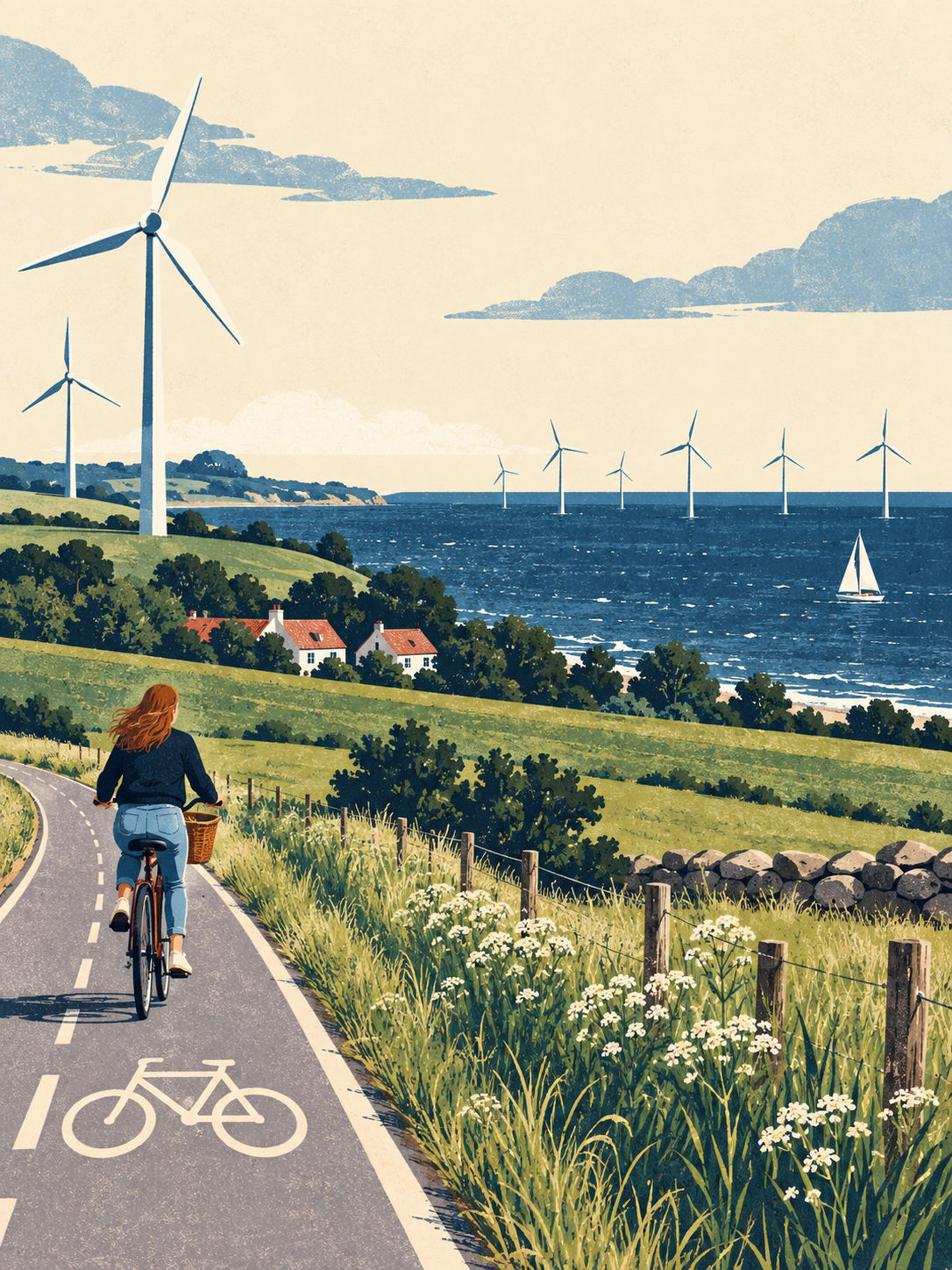
Denmark links wind power, farming, transport and social policy in a national transition with visible trade-offs. a green transition cost households is negotiated by governments, organised groups and populations with different security, economic and political constraints.
Reading confidence0% of the way to explored
The deeper explanation
The answer in detail
The answer is shaped by domestic institutions, regional relationships, resources and everyday life. It becomes clearer when the immediate event is connected to the institutions and choices behind it.
Why it matters
The transition is judged in household bills, transport costs and the support available to people with fewer resources. Denmark’s climate plan matters because it turns emissions targets into choices about power, farming, transport and household costs.
The power network behind a green transition cost households
Alliances, trade routes, finance and information flows change the leverage available to each actor, so a local move can alter choices far beyond the original dispute.
Domestic politics and public budgets set the room for manoeuvre: leaders must convert external pressure into policies that people, institutions and markets will bear.
System lens
What makes this more complicated?
Three layers that help explain what changes the outcome.
Starting conditions
History, resources and institutional capacity set the starting position before the visible outcome appears.
Limits and trade-offs
Rules, capacity and competing priorities limit which responses are practical, even when several options look possible.
Choices and distribution
The outcome depends on who can change those conditions and how its consequences are shared.
How does Denmark turn climate ambition into everyday policy?
Shared background, people, references and other questions for this story collection.
Read the main storyMeet the players
Denmark integrates wind power, agriculture, and transport in its climate policies.
government
Danish Government
Policy Maker
Wants toto implement climate policies that integrate various sectors.
LeveragePolicy-making authority over environmental regulations.
Read profile: Danish Government
The Danish Government drives the national transition towards sustainable practices by linking wind power, farming, and transport policies. It faces constraints in balancing economic growth with environmental goals. The government's decisions directly impact households and industries, shaping the overall effectiveness of climate initiatives.
organization
Danish Farmers Union
Advocate for Farmers
Wants toto ensure farmers can reduce emissions while maintaining livelihoods.
LeverageRepresentation of farmers' interests in policy discussions.
Read profile: Danish Farmers Union
The Danish Farmers Union represents the interests of farmers in the climate transition. It advocates for policies that allow for sustainable farming practices without compromising economic viability. The union's influence is crucial in negotiating the balance between environmental goals and agricultural productivity.
organization
Danish Wind Industry Association
Promoter of Wind Energy
Wants toto expand wind energy production in Denmark.
LeverageInfluence over renewable energy policy and investment.
Read profile: Danish Wind Industry Association
The Danish Wind Industry Association advocates for the growth of wind energy as a central component of Denmark's climate strategy. It works to influence policy and investment in renewable energy infrastructure. The association's efforts are vital in positioning wind power as a key resource for reducing emissions.
government
Danish Transport Authority
Regulator of Transport Policies
Wants toto implement sustainable transport solutions.
LeverageRegulatory power over transport policies and infrastructure.
Read profile: Danish Transport Authority
The Danish Transport Authority develops and enforces regulations that promote sustainable transport options. Its role is critical in reducing emissions from the transport sector, which is linked to broader climate ambitions. The authority's decisions affect infrastructure development and public transport initiatives.
organization
European Commission
Overseer of Climate Policies in Europe
Wants toto guide member states in achieving climate goals.
LeverageAuthority to set climate policy guidelines for EU member states.
Read profile: European Commission
The European Commission provides frameworks and funding for sustainable projects, influencing climate policies across Europe, including Denmark's initiatives. Its role helps align Denmark's climate ambitions with broader European objectives, fostering cooperation among member states.
Sources & visual credits
Flags and logos identify the actors; they do not imply endorsement.
Story collection
6 questions to explore
Open a question to read its explainer and follow the linked questions in this collection.
A quick glossary for this collection.
InstitutionAn organisation or rule that structures collective decisions.
IncentiveA reason that encourages a person or organisation to act.
Trade-offA gain that requires accepting a cost or limitation.
ResilienceThe ability to absorb disruption and recover.
Self-determinationThe right of a people to decide its political future.
ProductivityThe amount produced from a given set of inputs.
Sources for the whole story
How we work ↗Sources to start with
These references support the story collection as a whole.
Take the question with you
Visit the shop →Make complex ideas conversation starters.
Explore humorous products inspired by stories such as How does Denmark turn climate ambition into everyday policy?.