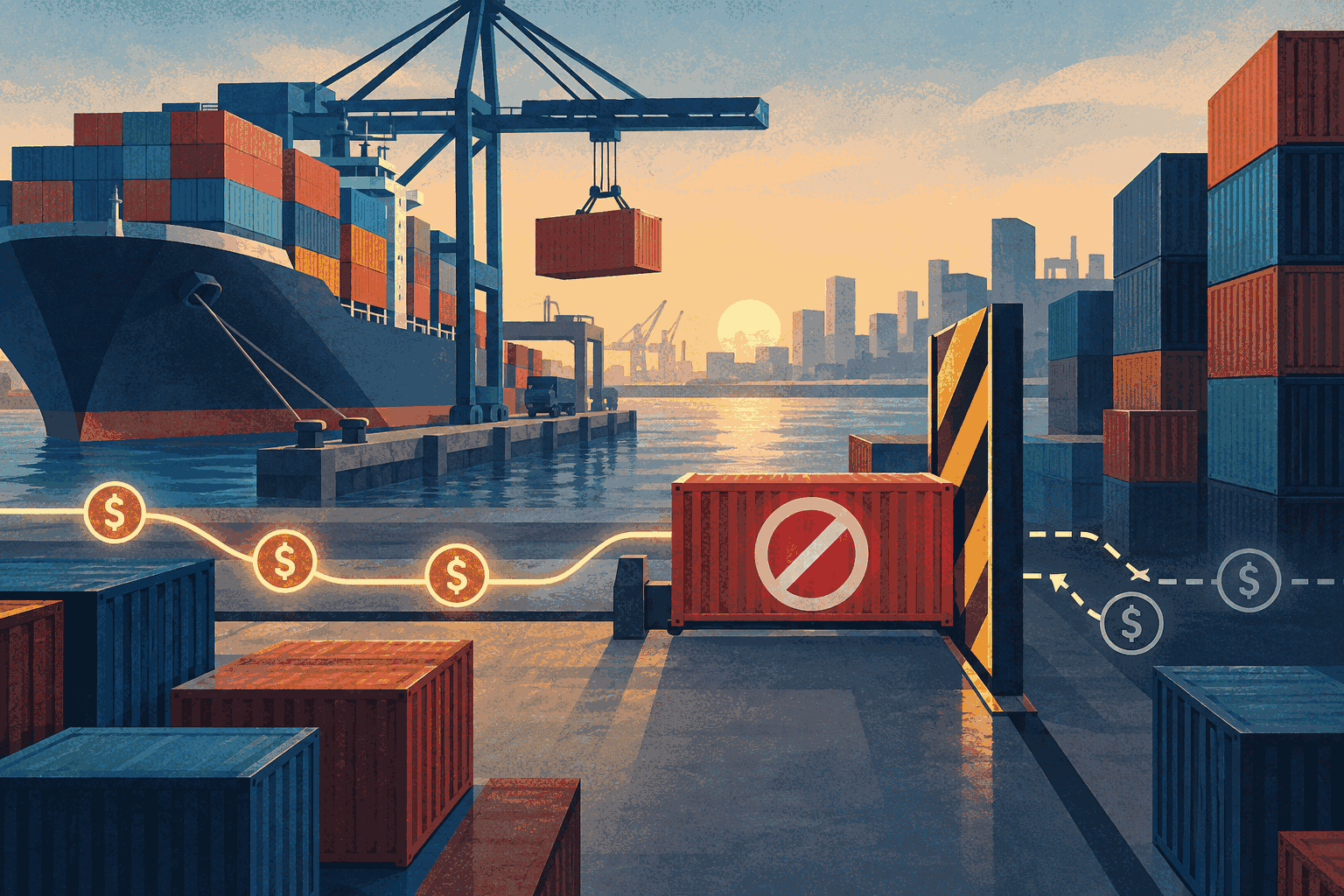
Sanctions can raise the cost of a policy, constrain resources or signal opposition. Economic damage does not automatically produce political concessions: leaders may shift costs to others or value their objectives more highly. Results depend on a realistic demand, coordinated enforcement and a credible offer of relief. the difference between targeted and broad sanctions is negotiated by governments, organised groups and populations with different security, economic and political constraints.
Reading confidence0% of the way to explored
The deeper explanation
The answer in detail
Targeted sanctions focus on named individuals, organisations or specified activities, such as arms purchases. Broad measures restrict large parts of an economy. Targeting aims to concentrate pressure, but connected businesses and households can still be affected. The precise rules and exemptions matter more than the label alone.
Why it matters
Sanctions can influence jobs, food and energy prices, remittances and humanitarian aid. Judging a policy requires looking at who bears its costs as well as what its sponsors want to achieve.
The power network behind the difference between targeted and broad sanctions
Alliances, trade routes, finance and information flows change the leverage available to each actor, so a local move can alter choices far beyond the original dispute.
Domestic politics and public budgets set the room for manoeuvre: leaders must convert external pressure into policies that people, institutions and markets will bear.
System lens
What makes this more complicated?
Three layers that help explain what changes the outcome.
Starting conditions
Earlier decisions, alliances and unequal leverage set the starting position before the visible dispute unfolds.
Limits and trade-offs
Rules, capacity and competing priorities limit which responses are practical, even when several options look possible.
Choices and distribution
The outcome depends on who can change those conditions and how its consequences are shared.
Can economic sanctions change a government’s behaviour?
Shared background, people, references and other questions for this story collection.
Read the main storyMeet the players
Economic sanctions can influence government behavior but their effectiveness varies.
organization
UN Security Council
Imposes and oversees sanctions
Wants toto enforce international peace and security through sanctions.
LeverageAuthority to impose sanctions and coordinate international responses.
Read profile: UN Security Council
The UN Security Council is responsible for imposing sanctions on countries that threaten international peace. It focuses on specific individuals or organizations, as well as broader economic measures. The Council's decisions aim to compel compliance with international norms, but the effectiveness of these sanctions can vary based on enforcement and the targeted government's response.
government
Targeted Governments
Respond to sanctions
Wants toto maintain power and pursue national objectives despite sanctions.
LeverageAbility to adapt policies or seek alternative economic partnerships.
Read profile: Targeted Governments
Governments targeted by sanctions often face increased costs and resource constraints. They may adapt by shifting costs to their populations or finding alternative trade partners. The leadership's willingness to change policies in response to sanctions can depend on their valuation of national objectives versus the economic impact of the sanctions.
company
International Trade Banks
Facilitate or restrict financial transactions
Wants toto manage risk and process payments in international trade.
LeverageControl over financial services essential for international trade.
Read profile: International Trade Banks
International trade banks facilitate transactions by providing credit and managing risk. Sanctions can restrict their ability to operate, making financial services more expensive or unavailable. This can hinder firms' ability to pay suppliers, even for non-prohibited goods, affecting overall trade dynamics.
group
Affected Households
Bear the economic burden of sanctions
Wants toto maintain livelihoods amidst economic challenges.
LeverageCollective response to economic conditions and potential for social unrest.
Read profile: Affected Households
Households affected by sanctions often experience job losses, higher prices, and reduced access to goods. The economic burden can spread as businesses cut back due to increased costs or uncertainty in transactions. Humanitarian exemptions may exist, but practical access to aid can be limited by the sanctions framework.
organization
International Committee of the Red Cross
Provide aid and support
Wants toto deliver humanitarian assistance despite sanctions.
LeverageAbility to mobilize resources and provide essential services to affected populations.
Read profile: International Committee of the Red Cross
The International Committee of the Red Cross aims to provide aid to populations affected by sanctions. They navigate complex regulatory environments to ensure that assistance reaches those in need. However, they face challenges such as compliance costs and logistical barriers, which can limit their effectiveness in delivering aid.
Sources & visual credits
Flags and logos identify the actors; they do not imply endorsement.
Story collection
6 questions to explore
Open a question to read its explainer and follow the linked questions in this collection.
A quick glossary for this collection.
SanctionA restriction used to pursue a political or security objective.
Asset freezeA prohibition on dealing with specified assets under applicable rules.
EmbargoA prohibition on specified trade.
Targeted sanctionA measure directed at particular actors or activities.
ComplianceFollowing the applicable restrictions.
OvercomplianceAvoiding permitted activity because of perceived legal or operational risk.
Sources for the whole story
How we work ↗Sources to start with
These references support the story collection as a whole.
Take the question with you
Visit the shop →Make complex ideas conversation starters.
Explore humorous products inspired by stories such as Can economic sanctions change a government’s behaviour?.