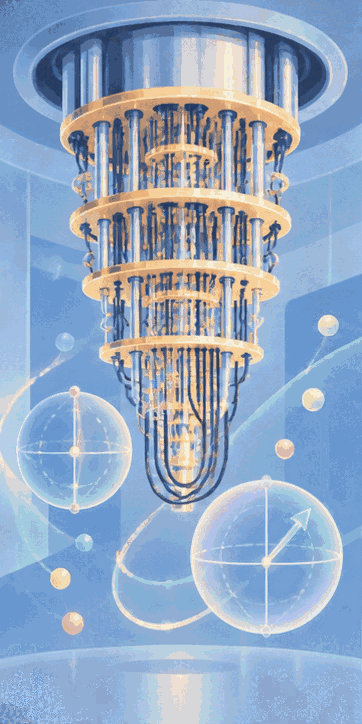
Quantum computers use superposition and entanglement to represent information differently. Will quantum computers change everything—or only a few things depends on laboratories, engineers, suppliers and the physical systems that turn an idea into something reliable and affordable.
Reading confidence0% of the way to explored
Complex · 10 min read
The deeper explanation
The answer is shaped by technical capability, infrastructure, cost, safety and public choices about deployment. It becomes clearer when the immediate event is connected to the institutions and choices behind it.
The immediate chain is specific to Will quantum computers change everything—or only a few things? : Quantum computers use superposition and entanglement to represent information differently. Their advantage is expected in specialised problems such as simulation, optimisation and cryptography. Noise, error correction and extreme engineering requirements still limit practical machines.
The system is constrained by the conditions described in the story. Quantum machines process information in a radically different way, promising breakthroughs for selected problems rather than faster answers to everything. Understanding the deeper picture means connecting technical capability with infrastructure, cost, safety, regulation and the choices people make about deployment. The outcome depends on which pressures are strongest, which resources are available and how the people or institutions involved respond.
The situation can change when the relevant actors alter their behaviour, when a key resource becomes scarce or available, or when a rule changes who can act and at what cost.
The consequences extend beyond the immediate question. Quantum progress could reshape cybersecurity, drug discovery, materials and logistics while leaving most everyday computing unchanged.
A systems view makes the longer mechanism visible: Starting conditions: Evidence, available capability and access set the starting position before the technology reaches everyday use. Limits and trade-offs: Rules, capacity and competing priorities limit which responses are practical, even when several options look possible. Choices and distribution: The outcome depends on who can change those conditions and how its consequences are shared.
For Will quantum computers change everything—or only a few things?, the practical outcome turns on Starting conditions, Limits and trade-offs, Choices and distribution. Those details determine what each participant can do next and how the result changes over time. The visible outcome is therefore the end of a chain: a decision changes access to a resource, that change alters behaviour, and the new behaviour affects the next decision.
Why it matters
Quantum progress could reshape cybersecurity, drug discovery, materials and logistics while leaving most everyday computing unchanged.
The infrastructure behind Will quantum computers change everything—or only a few things
Standards, software, data, energy and specialised equipment determine who can use will quantum computers change everything—or only a few things and whether different systems work together.
Investment and regulation shape the pace: research funding and large customers pay for scale, while safety, privacy or export rules determine where the benefits and risks land.
Story collection
6 questions to explore
Open a question to read its explainer and follow the linked questions in this collection.
Meet the players
The people and organisations that can change what happens in “Will quantum computers change everything—or only a few things?”. Each card explains a goal, a source of leverage and a constraint.
Companies
Technology companies
Organisations building computing & ai systems
Wants toturn technical capability into products
LeverageControl of product design, data, infrastructure and distribution.
Read profile: Technology companies
Companies decide which designs, tools and services reach the public. Their choices make the question in this story concrete for customers, workers and competitors.
They can invest, release, restrict or redesign a product, but depend on chips, cloud infrastructure, skilled people, capital and public trust.
What to watchWatch the decisions, resources or constraints that can materially change this actor’s position.
Sources: [1]
Operators
Infrastructure providers
Cloud, network, power or hardware operators
Wants tokeep the physical systems running
LeverageAccess to scarce physical capacity.
Read profile: Infrastructure providers
Infrastructure providers supply the computing, networks, energy or specialist equipment that the technology needs. A shortage or outage can stop a much larger service.
Their leverage comes from hard-to-replace capacity, while geography, investment lead times and regulation constrain expansion.
What to watchWatch the decisions, resources or constraints that can materially change this actor’s position.
Sources: [1]
Scientific community
Researchers and engineers
People producing the evidence and designs
Wants tomake the system work reliably
LeverageEvidence, specialist knowledge and technical standards.
Read profile: Researchers and engineers
Researchers and engineers test what is technically possible, measure limits and solve practical failures. Their work changes what companies can build and what users can expect.
Experiments, uncertainty, safety requirements and the time needed to verify results limit how fast ideas become products.
What to watchWatch the decisions, resources or constraints that can materially change this actor’s position.
Sources: [1]
Institutions
Public regulators
Authorities setting rules for deployment
Wants toallow useful applications while limiting harm
LeverageLicensing, standards, investigations and enforcement.
Read profile: Public regulators
Regulators translate concerns about safety, privacy, competition or security into rules that companies and users must follow. Their decisions affect which systems can launch and how they are monitored.
They need evidence and technical capacity, and must balance innovation with public accountability.
What to watchWatch the decisions, resources or constraints that can materially change this actor’s position.
Sources: [1]
Community
Users and affected organisations
People, firms and public services that adopt or reject it
Wants toget useful results without unacceptable costs or risks
LeverageAdoption, spending, feedback and refusal.
Read profile: Users and affected organisations
Users decide whether the technology solves a real problem in homes, workplaces, schools or public services. Their behaviour creates demand and exposes failures.
They have purchasing power and practical knowledge, but often cannot inspect or replace the systems they depend on.
What to watchWatch the decisions, resources or constraints that can materially change this actor’s position.
Sources: [1]
Decisions travel between them
Technology companiesInfrastructure providersTechnology companies and Infrastructure providers shape the outcome through the decisions and limits described in this story.
Technology companiesResearchers and engineersTechnology companies and Researchers and engineers shape the outcome through the decisions and limits described in this story.
Technology companiesPublic regulatorsTechnology companies and Public regulators shape the outcome through the decisions and limits described in this story.
Technology companiesUsers and affected organisationsTechnology companies and Users and affected organisations shape the outcome through the decisions and limits described in this story.
Sources & visual credits
Flags and logos identify the actors; they do not imply endorsement.
System lens
What makes this more complicated?
Three layers that help explain what changes the outcome.
Starting conditions
Evidence, available capability and access set the starting position before the technology reaches everyday use.
Limits and trade-offs
Rules, capacity and competing priorities limit which responses are practical, even when several options look possible.
Choices and distribution
The outcome depends on who can change those conditions and how its consequences are shared.
What happens next?
Too uncertain to forecast responsibly
Explore the topic
Try a complex prompt
Use this question to continue the explanation at the depth you selected.
Analyse this story as a connected technical and social system. Cover the underlying mechanism, infrastructure, maturity, safety, economics, regulation, access, unintended consequences and the largest sources of uncertainty.
10 essential words
QubitThe basic unit of quantum information.
SuperpositionA quantum state combining several possible outcomes.
EntanglementA strong quantum link between particles or qubits.
Quantum gateAn operation that changes a qubit’s state.
DecoherenceThe loss of delicate quantum behaviour through environmental interaction.
PrototypeAn early version built to test an idea.
ScaleMoving a technology from limited trials to widespread use.
InfrastructureThe physical and digital systems a technology depends on.
RegulationRules governing how a technology may be developed or used.
Trade-offA choice in which gaining one benefit can create another cost.
Editorial transparency
What is established, interpreted and still open?
The sources establish the capability, limits and governance questions surrounding the technology.
Performance, cost, safety and adoption remain uncertain as systems develop.
The explanation connects the immediate question to the institutions and choices around it.
What happens next will depend on testing, deployment choices, governance and who can access the technology.
Evidence behind the explanation
How we work ↗Sources to start with
These references anchor the key facts and give you a path to explore further.
One quick check, then keep exploring.
Question 1 of 3
Will quantum computers change everything—or only a few things?
Take the question with you
Visit the shop →Make complex ideas conversation starters.
Explore humorous products inspired by stories such as Will quantum computers change everything—or only a few things?.
Understand the next story
One clear briefing, every week.
Three topics worth understanding, without the noise.
Next explanation
Explore next →