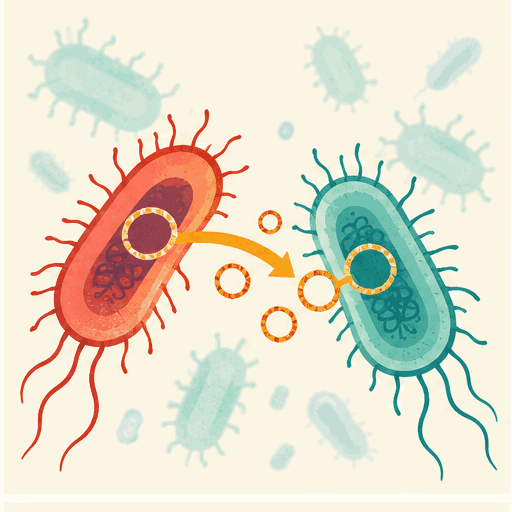
Bacteria become resistant when traits let them survive a drug that once stopped them. resistance spread depends on laboratories, engineers, suppliers and the physical systems that turn an idea into something reliable and affordable.
Reading confidence0% of the way to explored
The deeper explanation
The answer in detail
Survivors multiply and may pass resistance genes to other bacteria, including across species. The answer depends on the mechanism and the conditions under which it operates. Scientists compare independent lines of evidence and test alternative explanations before drawing a conclusion.
Why it matters
Drug resistance grows through evolution and can make ordinary infections harder to treat.
The infrastructure behind resistance spread
Standards, software, data, energy and specialised equipment determine who can use resistance spread and whether different systems work together.
Investment and regulation shape the pace: research funding and large customers pay for scale, while safety, privacy or export rules determine where the benefits and risks land.
System lens
What makes this more complicated?
Three layers that help explain what changes the outcome.
Starting conditions
Evidence, available capability and access set the starting position before the technology reaches everyday use.
Limits and trade-offs
Rules, capacity and competing priorities limit which responses are practical, even when several options look possible.
Choices and distribution
The outcome depends on who can change those conditions and how its consequences are shared.
What Happens When Antibiotics Stop Working?
Shared background, people, references and other questions for this story collection.
Read the main storyMeet the players
Antibiotic resistance poses a significant challenge to treating infections.
organization
World Health Organization
Global health authority
Wants toto combat antimicrobial resistance through guidelines and public health initiatives.
LeverageInfluences global health policies and practices regarding antibiotic use.
Read profile: World Health Organization
The World Health Organization (WHO) leads global efforts to address antimicrobial resistance, providing guidelines for prevention and control. It emphasizes the importance of vaccination, hygiene, and appropriate antibiotic use to reduce infections. WHO's initiatives aim to educate health systems and the public on the risks associated with antibiotic misuse.
organization
Centers for Disease Control and Prevention
Public health agency
Wants toto provide guidelines and resources for antibiotic stewardship.
LeverageShapes antibiotic prescribing practices and public health responses.
Read profile: Centers for Disease Control and Prevention
The Centers for Disease Control and Prevention (CDC) provides guidelines for appropriate antibiotic use and infection control measures. The CDC conducts research and offers resources to healthcare providers and the public to mitigate the spread of resistant infections.
group
Patients
Consumers of healthcare
Wants toto seek effective treatment while understanding the risks of antibiotic misuse.
LeverageInfluence demand for antibiotics and adherence to treatment regimens.
Read profile: Patients
Patients are essential stakeholders in the fight against antibiotic resistance. Their understanding of when antibiotics are necessary and their adherence to prescribed treatments can significantly impact resistance patterns. Educating patients about the dangers of misuse is crucial for reducing unnecessary antibiotic consumption.
company
Pfizer Inc.
Developer of antibiotics
Wants toto develop new antibiotics and treatments to combat resistance.
LeverageControls the development and availability of new antibiotic treatments.
Read profile: Pfizer Inc.
Pfizer Inc. is responsible for researching and developing new antibiotics. Their efforts are vital in addressing the growing issue of antibiotic resistance. However, the emergence of resistance can render new drugs ineffective, highlighting the need for ongoing research and responsible use of existing antibiotics.
organization
Infectious Diseases Society of America
Advocate for infection control
Wants toto promote hygiene and infection control measures.
LeverageInfluences public health policies and community health initiatives.
Read profile: Infectious Diseases Society of America
The Infectious Diseases Society of America focuses on implementing strategies to prevent infections and reduce the spread of antibiotic resistance. They advocate for vaccination, hygiene practices, and infection control measures in healthcare settings. Their work is essential in educating communities about the importance of preventing infections to reduce reliance on antibiotics.
Sources & visual credits
Flags and logos identify the actors; they do not imply endorsement.
Story collection
6 questions to explore
Open a question to read its explainer and follow the linked questions in this collection.
A quick glossary for this collection.
AntibioticA medicine that acts against bacteria
BacteriumA single-celled microorganism
ResistanceAbility to withstand a drug
MutationA change in genetic material
Gene transferMovement of genes between organisms
VirusInfectious agent that uses host cells
Sources for the whole story
How we work ↗Sources to start with
These references support the story collection as a whole.
Take the question with you
Visit the shop →Make complex ideas conversation starters.
Explore humorous products inspired by stories such as What Happens When Antibiotics Stop Working?.