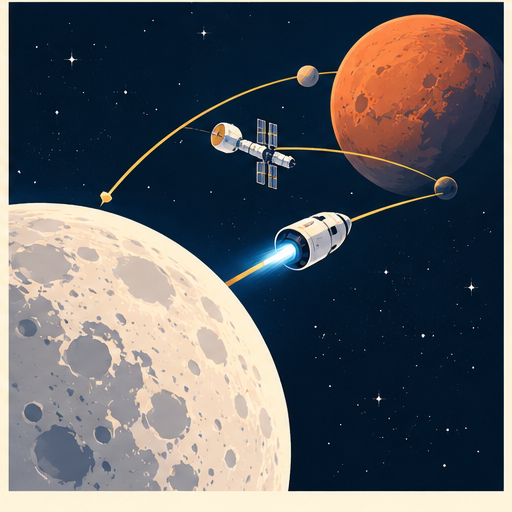
Apollo made short visits; new missions aim to study more places and learn to operate for longer. the Moon help a Mars mission depends on laboratories, engineers, suppliers and the physical systems that turn an idea into something reliable and affordable.
Reading confidence0% of the way to explored
The deeper explanation
The answer in detail
Crews can test habitats, suits and operations a few days from Earth before much longer journeys. The answer depends on the mechanism and the conditions under which it operates. In this story, the wider context is the Moon can answer old scientific questions and help test ways of living beyond Earth.
Why it matters
The Moon can answer old scientific questions and help test ways of living beyond Earth.
The infrastructure behind the Moon help a Mars mission
Standards, software, data, energy and specialised equipment determine who can use the moon help a mars mission and whether different systems work together.
Investment and regulation shape the pace: research funding and large customers pay for scale, while safety, privacy or export rules determine where the benefits and risks land.
System lens
What makes this more complicated?
Three layers that help explain what changes the outcome.
Starting conditions
Evidence, available capability and access set the starting position before the technology reaches everyday use.
Limits and trade-offs
Rules, capacity and competing priorities limit which responses are practical, even when several options look possible.
Choices and distribution
The outcome depends on who can change those conditions and how its consequences are shared.
Why Are We Going Back to the Moon?
Shared background, people, references and other questions for this story collection.
Read the main storyMeet the players
Returning to the Moon involves national space agencies, commercial companies, and international treaties coordinating exploration, resource use, and scientific research.
space agency
NASA
Leads Artemis missions and coordinates US lunar exploration
Wants toexpand lunar exploration, study new regions, and test technologies for future missions beyond Earth.
LeverageControls US government funding, mission design, and partnerships for lunar exploration.
Read profile: NASA
NASA directs the Artemis program, which aims to send astronauts to the lunar south pole, collect new samples, and test long-duration operations. NASA manages mission planning, hardware development, and international partnerships. Its decisions about landing sites, mission goals, and collaboration shape which scientific questions are addressed and how lunar resources are accessed. NASA operates under US policy and international agreements, which constrain its activities and require coordination with other actors.
space agency
European Space Agency
International partner in lunar exploration and technology development
Wants tocontribute technology, research, and coordination to multinational lunar missions.
LeverageProvides technical modules and research, and negotiates access to mission roles and data.
Read profile: European Space Agency
The European Space Agency collaborates with NASA and other partners on lunar missions, providing modules, scientific instruments, and expertise. ESA's participation enables access to shared data and resources, but its role depends on negotiated agreements and funding from member states. ESA's contributions influence which technologies are tested and how international coordination is managed.
space agency
China National Space Administration
Leads China's independent lunar exploration program
Wants toadvance China's scientific, technological, and strategic interests through lunar missions.
LeverageControls Chinese government funding, mission planning, and technology for lunar exploration.
Read profile: China National Space Administration
The China National Space Administration manages lunar landers, rovers, and sample-return missions, focusing on regions like the lunar south pole. CNSA's independent program enables China to set its own priorities and timelines, but it must operate within international treaties and respond to global competition. CNSA's actions affect the distribution of lunar data and the pace of technological development.
company
SpaceX
Commercial launch provider and technology developer for lunar missions
Wants todevelop and operate launch vehicles and landers for government and commercial lunar missions.
LeverageProvides launch and landing services, influencing access and cost for lunar missions.
Read profile: SpaceX
SpaceX supplies rockets and landers for NASA's Artemis program and other lunar projects. The company designs reusable vehicles that can deliver cargo and crew to the Moon. SpaceX's technology choices and pricing affect mission feasibility and the scale of lunar operations. Its contracts depend on government funding and compliance with international rules.
international organization
United Nations Office for Outer Space Affairs
Administers space treaties and coordinates international rules for lunar activity
Wants tooversee the implementation of space treaties and facilitate coordination among nations and companies.
LeverageSets and interprets international legal frameworks that constrain and enable lunar missions.
Read profile: United Nations Office for Outer Space Affairs
The United Nations Office for Outer Space Affairs manages the Outer Space Treaty and related agreements, which set legal boundaries for lunar exploration and resource use. UNOOSA's role is to monitor compliance, mediate disputes, and adapt rules as new actors and technologies emerge. Its authority depends on member states' cooperation and the evolving landscape of commercial and national activity.
Sources & visual credits
Flags and logos identify the actors; they do not imply endorsement.
Story collection
6 questions to explore
Open a question to read its explainer and follow the linked questions in this collection.
A quick glossary for this collection.
Sources for the whole story
How we work ↗Sources to start with
These references support the story collection as a whole.
Take the question with you
Visit the shop →Make complex ideas conversation starters.
Explore humorous products inspired by stories such as Why Are We Going Back to the Moon?.