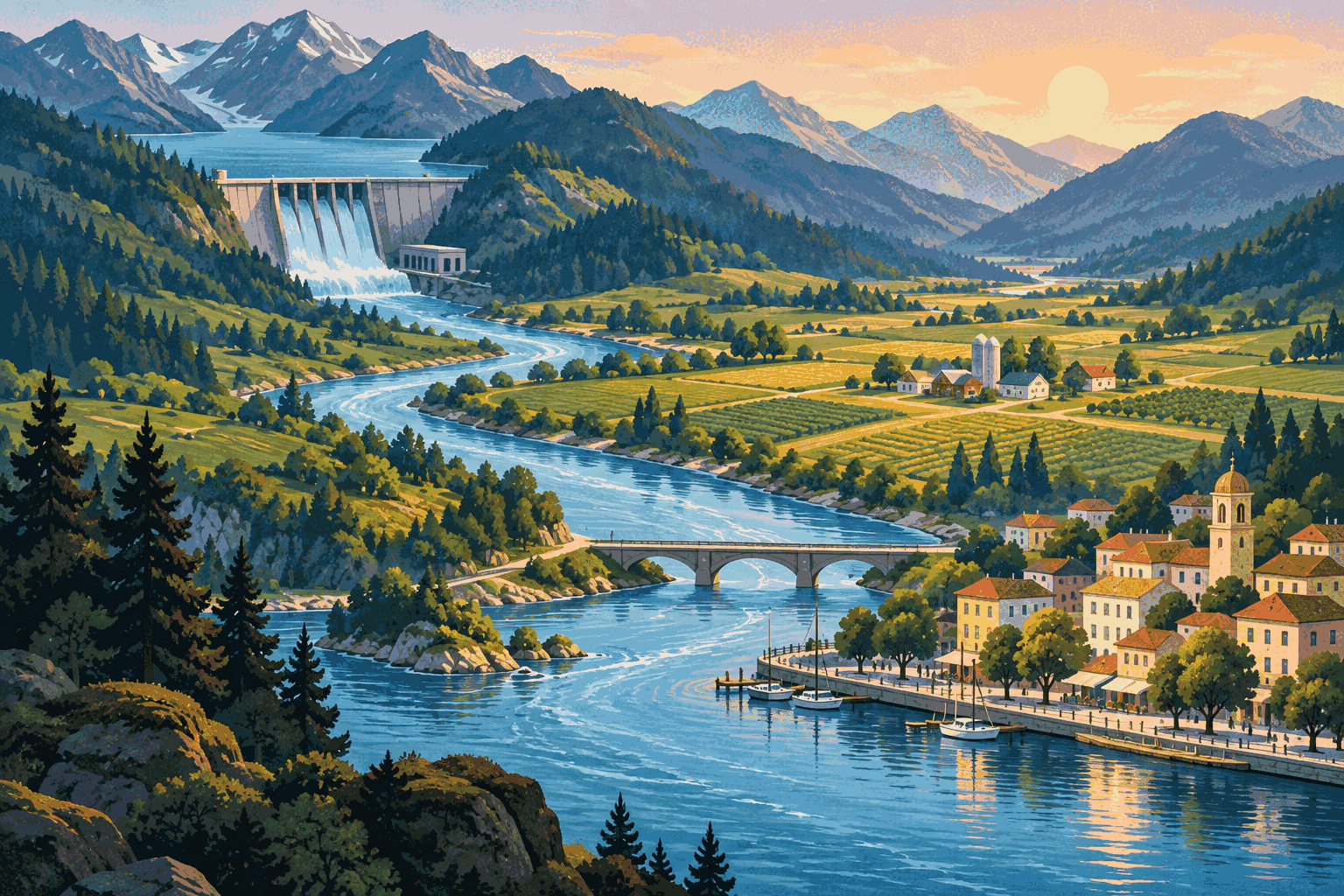
Actions in one part of a river basin can affect others through water flows, pollution and sediment. Countries must consider uses such as drinking water, farming, energy and ecosystems. Cooperation works better when they share information and negotiate benefits and responsibilities rather than treating every use as a fixed loss for a neighbour. sharing electricity make water cooperation easier is negotiated by governments, organised groups and populations with different security, economic and political constraints.
Reading confidence0% of the way to explored
The deeper explanation
The answer in detail
It can. An upstream country may benefit from power sales while downstream countries benefit from electricity or better-managed flows. Such arrangements expand the set of possible bargains. They still require reliable transmission, fair payment and safeguards, because energy benefits do not automatically compensate every community affected by a dam.
Why it matters
River decisions affect drinking water, food prices, electricity and flood risk. Sharing dependable information can be as important as agreeing on a headline volume of water.
The power network behind sharing electricity make water cooperation easier
Alliances, trade routes, finance and information flows change the leverage available to each actor, so a local move can alter choices far beyond the original dispute.
Domestic politics and public budgets set the room for manoeuvre: leaders must convert external pressure into policies that people, institutions and markets will bear.
System lens
What makes this more complicated?
Three layers that help explain what changes the outcome.
Starting conditions
Earlier decisions, alliances and unequal leverage set the starting position before the visible dispute unfolds.
Limits and trade-offs
Rules, capacity and competing priorities limit which responses are practical, even when several options look possible.
Choices and distribution
The outcome depends on who can change those conditions and how its consequences are shared.
What happens when countries share a river?
Shared background, people, references and other questions for this story collection.
Read the main storyMeet the players
Countries sharing a river must navigate complex interactions affecting water availability and ecosystem health.
organization
UNECE
Facilitator of water allocation agreements
Wants toto promote equitable water management among countries sharing transboundary rivers.
LeverageInfluence over international water management standards and practices.
Read profile: UNECE
The United Nations Economic Commission for Europe (UNECE) supports countries in negotiating water allocation agreements under international law. It emphasizes principles such as equitable use and cooperation, which guide discussions on water sharing. UNECE also provides resources and frameworks to help nations address competing needs and environmental concerns.
organization
UN Watercourses Convention
Framework for international water law
Wants toto establish guidelines for the equitable and reasonable use of international watercourses.
LeverageEstablishes legal norms that countries can reference in negotiations.
Read profile: UN Watercourses Convention
The UN Watercourses Convention provides a legal framework for countries sharing rivers to negotiate water allocation. It promotes principles like cooperation and prevention of significant harm, guiding countries in their discussions. The Convention aims to facilitate sustainable management of shared water resources, balancing various needs and ecological requirements.
organization
International Commission on Irrigation and Drainage (ICID)
Advocate for sustainable water management
Wants toto promote sustainable irrigation practices and equitable water sharing.
LeverageExpertise in irrigation and drainage that influences water management policies.
Read profile: International Commission on Irrigation and Drainage (ICID)
The International Commission on Irrigation and Drainage (ICID) works to improve water management in agriculture and promote equitable sharing of water resources among countries. ICID provides a platform for dialogue and knowledge exchange, helping countries develop strategies that consider both agricultural needs and ecosystem health.
group
Upstream Countries
Decision-makers on water management
Wants toto manage water resources while maximizing benefits from hydropower and agriculture.
LeverageControl over water resources and potential hydropower generation.
Read profile: Upstream Countries
Upstream countries control water flow and quality, impacting downstream communities. Their decisions regarding dam construction, water storage, and release schedules can significantly affect the availability of water for downstream users. These countries often negotiate with downstream nations to balance their own development needs with shared responsibilities.
organization
International River Treaties
Legal agreements governing water sharing
Wants toto provide a framework for cooperation and conflict resolution among countries sharing rivers.
LeverageFramework for cooperation that can enhance trust and reduce conflicts.
Read profile: International River Treaties
International river treaties establish the legal basis for water allocation and management among countries. They outline responsibilities, monitoring mechanisms, and procedures for dispute resolution. Effective treaties incorporate flexibility to adapt to changing conditions, ensuring that all parties can respond to challenges such as droughts or increased demand.
Sources & visual credits
Flags and logos identify the actors; they do not imply endorsement.
Story collection
6 questions to explore
Open a question to read its explainer and follow the linked questions in this collection.
A quick glossary for this collection.
River basinThe area draining into a river and its tributaries.
Riparian stateA state sharing a river or other watercourse.
UpstreamCloser to the source in the direction opposite the flow.
DownstreamFurther along in the direction of flow.
AllocationDistribution of available water among users or states.
Environmental flowWater conditions needed to sustain river ecosystems.
Sources for the whole story
How we work ↗Sources to start with
These references support the story collection as a whole.
Take the question with you
Visit the shop →Make complex ideas conversation starters.
Explore humorous products inspired by stories such as What happens when countries share a river?.