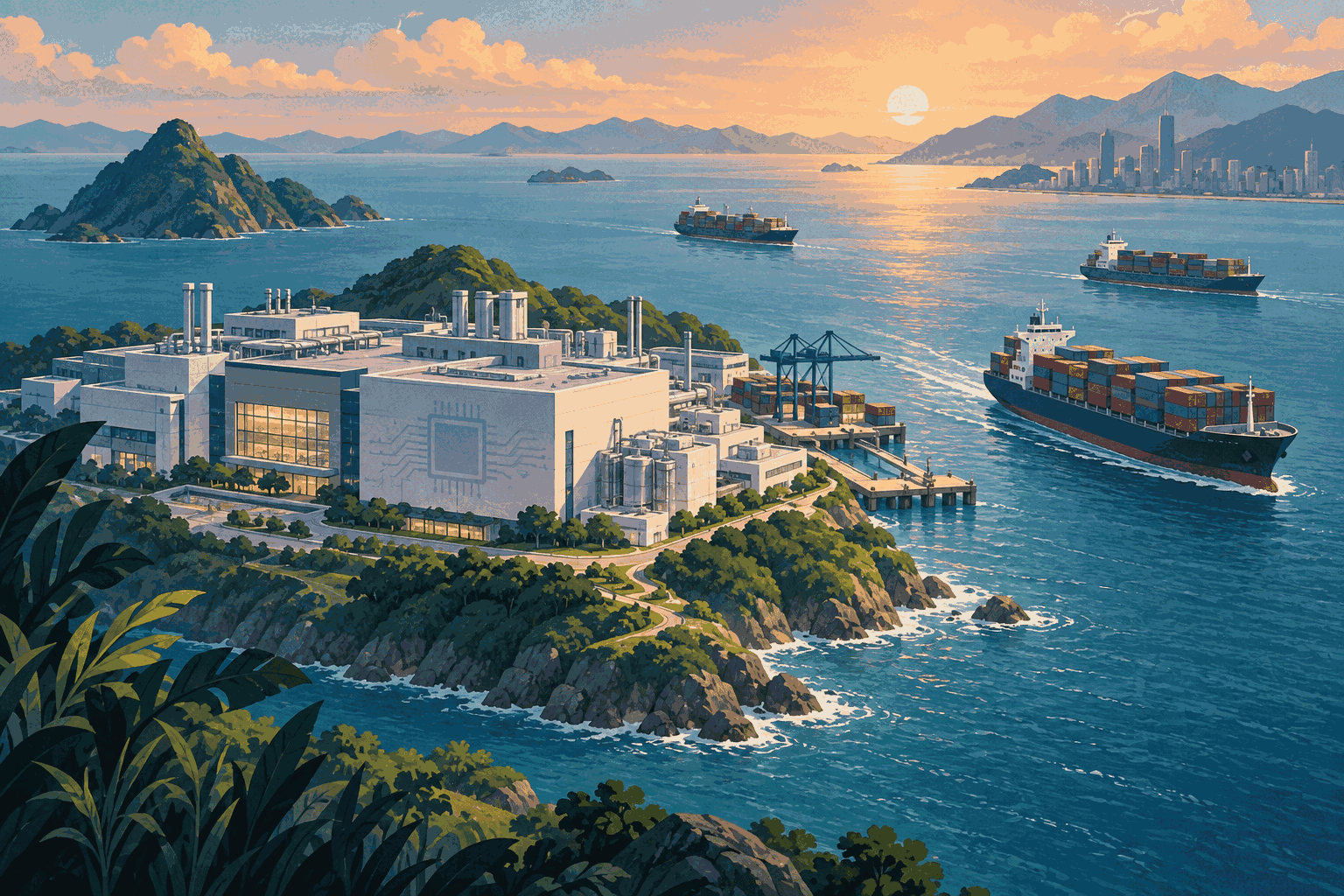
Taiwan is a self-governed democracy in a strategically important part of East Asia and a major centre of semiconductor production. A crisis could disrupt regional security, shipping and technology supplies. These connections raise the stakes for many countries, but economic importance does not make conflict inevitable or impossible. Taiwan matter to the semiconductor industry is negotiated by governments, organised groups and populations with different security, economic and political constraints.
Reading confidence0% of the way to explored
The deeper explanation
The answer in detail
Taiwan’s firms play an important role in chip fabrication, including advanced manufacturing. Production also depends on foreign design software, equipment, materials and customers. Replacing a disrupted factory takes more than constructing a building: specialised workers, supplier relationships and qualified manufacturing processes take time to reproduce.
Why it matters
A crisis could affect people in the region directly and disrupt products, shipping and jobs elsewhere. Keeping governance, legal claims and policy commitments separate helps make reporting about Taiwan easier to interpret.
The power network behind Taiwan matter to the semiconductor industry
Alliances, trade routes, finance and information flows change the leverage available to each actor, so a local move can alter choices far beyond the original dispute.
Domestic politics and public budgets set the room for manoeuvre: leaders must convert external pressure into policies that people, institutions and markets will bear.
System lens
What makes this more complicated?
Three layers that help explain what changes the outcome.
Starting conditions
Earlier decisions, alliances and unequal leverage set the starting position before the visible dispute unfolds.
Limits and trade-offs
Rules, capacity and competing priorities limit which responses are practical, even when several options look possible.
Choices and distribution
The outcome depends on who can change those conditions and how its consequences are shared.
Why does Taiwan matter far beyond its shores?
Shared background, people, references and other questions for this story collection.
Read the main storyMeet the players
Taiwan's geopolitical significance stems from its political status, regional security implications, and role in semiconductor production.

People's Republic of China
Claimant of Taiwan's sovereignty
Wants toto assert sovereignty over Taiwan and unify it with the mainland.
LeverageChina's economic and military power allows it to exert pressure on countries regarding their stance on Taiwan.
Read profile: People's Republic of China
The People's Republic of China claims Taiwan as part of its territory, despite never having governed it. This claim is central to its national policy and affects its diplomatic relations with other countries, particularly regarding recognition of Taiwan's government. China's military posture and political rhetoric around Taiwan significantly influence regional security dynamics.
Taiwan
Self-governing democracy
Wants toto maintain its self-governance and democratic institutions while navigating international relations.
LeverageTaiwan's semiconductor industry is vital for global technology supply chains, giving it economic leverage.
Read profile: Taiwan
Taiwan operates as a self-governed democracy with its own elected government and armed forces. It is a major center for semiconductor production, which is critical for global technology supply chains. Taiwan's political status is disputed, leading to complex diplomatic relationships with other nations, particularly the United States.
United States
Key player in Taiwan's defense and diplomatic relations
Wants toto support Taiwan's self-governance while managing relations with China.
LeverageThe U.S. military presence in the region and its economic ties to Taiwan enhance its influence over the situation.
Read profile: United States
The United States maintains a policy of strategic ambiguity regarding Taiwan, providing defensive support without a formal mutual-defense treaty. This approach aims to deter aggression from China while allowing for flexibility in U.S. responses to potential crises. The Taiwan Relations Act underpins U.S. commitments to Taiwan's security.
Semiconductor Industry
Critical sector for Taiwan and global technology
Wants toto maintain production and supply chains critical for technology.
LeverageThe industry's central role in global supply chains gives it significant economic importance.
Read profile: Semiconductor Industry
Taiwan's semiconductor industry is a leader in chip fabrication, essential for global technology markets. The industry's reliance on specialized workers, foreign design software, and equipment makes it vulnerable to disruptions. Any crisis affecting Taiwan could have far-reaching implications for technology supply chains worldwide.
Regional Neighbors
Stakeholders in Taiwan's security and stability
Wants toto ensure regional stability and security amidst tensions.
LeverageTheir economic and security partnerships with the U.S. and Taiwan position them as important stakeholders in the regional balance of power.
Read profile: Regional Neighbors
Countries in East Asia, including Japan and South Korea, have vested interests in Taiwan's stability due to geographical proximity and economic ties. They are concerned about the implications of a potential crisis in the Taiwan Strait, which could disrupt trade routes and regional security dynamics.
Sources & visual credits
Flags and logos identify the actors; they do not imply endorsement.
Story collection
6 questions to explore
Open a question to read its explainer and follow the linked questions in this collection.
A quick glossary for this collection.
Taiwan StraitThe waterway between Taiwan and mainland China.
Self-governmentPractical administration through a territory’s own institutions.
Diplomatic recognitionA state’s formal recognition of another state or government.
One-China policyA government’s policy concerning China and relations with Taiwan; formulations differ.
Strategic ambiguityLeaving aspects of a potential response uncertain.
SemiconductorA material used to make electronic components, including chips.
Sources for the whole story
How we work ↗Sources to start with
These references support the story collection as a whole.
Take the question with you
Visit the shop →Make complex ideas conversation starters.
Explore humorous products inspired by stories such as Why does Taiwan matter far beyond its shores?.