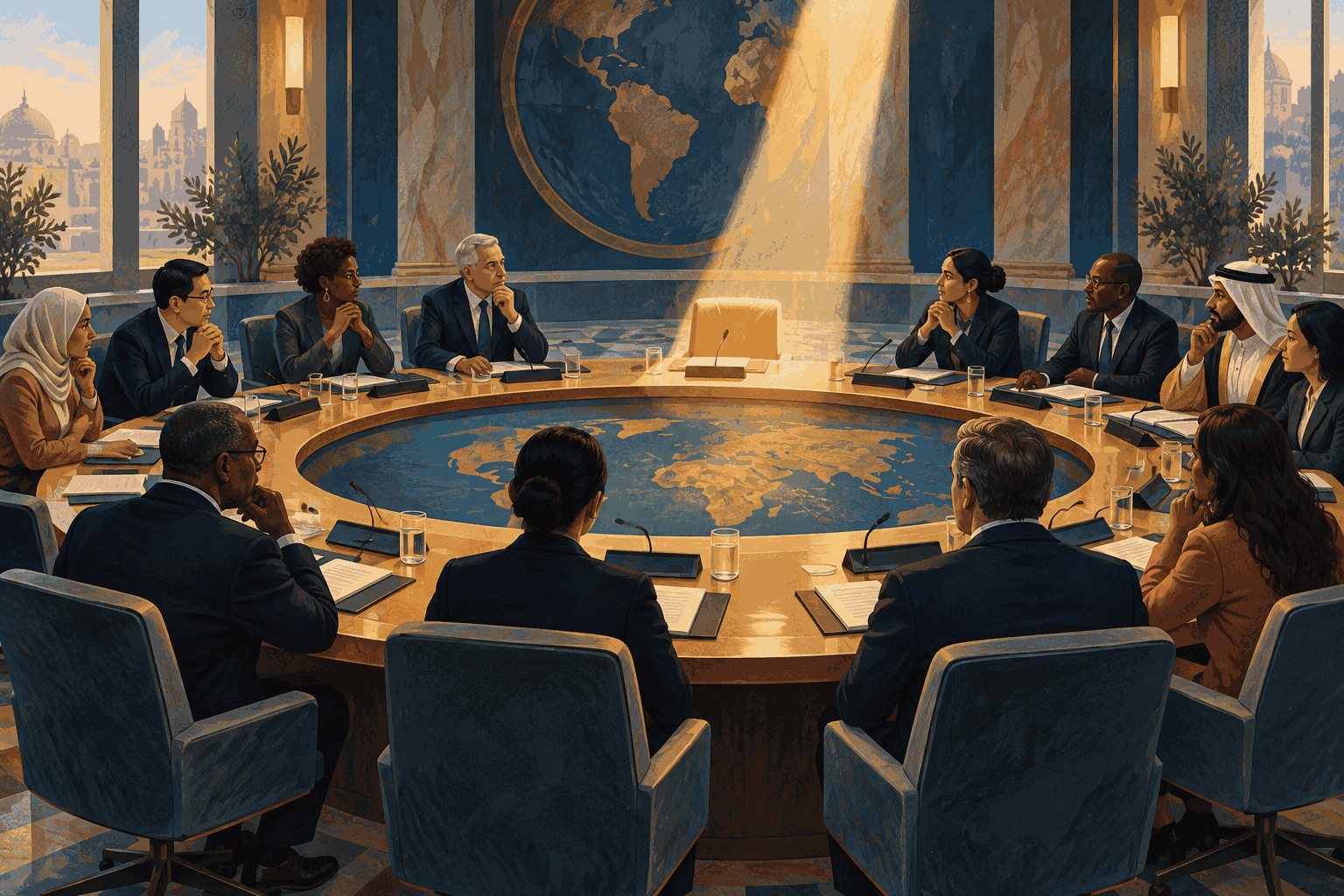
The UN does not have the powers of a world government. Its bodies have different mandates, and member states control key decisions and resources. Security Council divisions can block action on a crisis while humanitarian or technical work continues elsewhere in the UN system. Institutional deadlock is therefore not the same as total inactivity. reforming the UN so difficult is negotiated by governments, organised groups and populations with different security, economic and political constraints.
Reading confidence0% of the way to explored
The deeper explanation
The answer in detail
Governments disagree about representation, effectiveness and how much power they should surrender. Charter amendments require broad support and ratification by two-thirds of members, including all five permanent Security Council members. Changes affecting those members’ privileges therefore require their acceptance, which makes major reform politically demanding.
Why it matters
UN decisions can affect humanitarian assistance, conflict response and international standards. Knowing which institution is responsible helps distinguish a blocked political decision from work that continues on the ground.
The power network behind reforming the UN so difficult
Alliances, trade routes, finance and information flows change the leverage available to each actor, so a local move can alter choices far beyond the original dispute.
Domestic politics and public budgets set the room for manoeuvre: leaders must convert external pressure into policies that people, institutions and markets will bear.
System lens
What makes this more complicated?
Three layers that help explain what changes the outcome.
Starting conditions
Earlier decisions, alliances and unequal leverage set the starting position before the visible dispute unfolds.
Limits and trade-offs
Rules, capacity and competing priorities limit which responses are practical, even when several options look possible.
Choices and distribution
The outcome depends on who can change those conditions and how its consequences are shared.
Why is the United Nations sometimes unable to act?
Shared background, people, references and other questions for this story collection.
Read the main storyMeet the players
The United Nations' ability to act is often hindered by its structure and member states' control.
organization
United Nations General Assembly
Deliberative body of the UN
Wants toto represent all member states and make recommendations on peace and security.
LeverageThe General Assembly can influence international norms and mobilize support for initiatives, but it cannot enforce decisions without Security Council backing.
Read profile: United Nations General Assembly
The General Assembly includes all member states and is responsible for making recommendations on various issues, including peace and security. It also decides on the UN budget. Its broad representation allows for diverse perspectives, but its recommendations are not binding, which limits its power in crisis situations.
organization
United Nations Security Council
Primary body for international peace and security
Wants toto maintain international peace and security through binding resolutions.
LeverageThe Council's ability to impose sanctions or authorize military action gives it significant influence, but its effectiveness is often hampered by political disagreements among its members.
Read profile: United Nations Security Council
The Security Council has the authority to adopt binding decisions and is responsible for addressing threats to peace. Its smaller membership and veto power held by five permanent members create a dynamic where divisions can block action, impacting the UN's overall effectiveness.
organization
United Nations Peacekeepers
Implement peacekeeping missions
Wants toto maintain peace and security in conflict zones under specific mandates.
LeverageWhile they can protect civilians and support stability, their operations are constrained by the conditions on the ground and the mandates they are given.
Read profile: United Nations Peacekeepers
UN peacekeepers operate under defined mandates that require consent from the main parties involved in a conflict. Their effectiveness is contingent on the availability of personnel, equipment, and political support, which can limit their ability to ensure peace.
group
Member States of the United Nations
Control resources and decision-making
Wants toto influence UN actions through voting and resource allocation.
LeverageMember states can block actions through vetoes in the Security Council or by withholding funding and personnel, directly impacting the UN's ability to respond to crises.
Read profile: Member States of the United Nations
Member states hold significant power within the UN system, controlling key decisions and resources. Their agreement is necessary for the UN to act effectively, and divisions among them can lead to institutional deadlock.
group
Advocates for UN Reform
Push for changes in UN structure
Wants toto promote changes that enhance the effectiveness and representation of the UN.
LeverageTheir efforts can lead to discussions on reform, but significant changes require the approval of all five permanent members of the Security Council, making progress slow and politically complex.
Read profile: Advocates for UN Reform
Various countries and organizations advocate for reforming the UN to address issues of representation and effectiveness. However, achieving consensus on reforms is challenging due to differing national interests and the need for broad support among member states.
Sources & visual credits
Flags and logos identify the actors; they do not imply endorsement.
Story collection
6 questions to explore
Open a question to read its explainer and follow the linked questions in this collection.
A quick glossary for this collection.
UN CharterThe founding treaty of the United Nations.
General AssemblyThe UN body representing all member states.
Security CouncilThe body with primary responsibility for international peace and security.
VetoA permanent member’s negative vote blocking a substantive Council decision.
ResolutionA formal decision or statement adopted by a UN body.
MandateThe authorised task and scope of an operation or institution.
Sources for the whole story
How we work ↗Sources to start with
These references support the story collection as a whole.
Take the question with you
Visit the shop →Make complex ideas conversation starters.
Explore humorous products inspired by stories such as Why is the United Nations sometimes unable to act?.