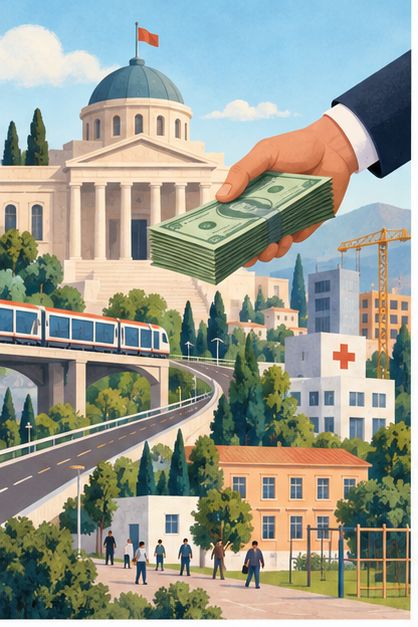
Governments borrow when spending exceeds revenue or when they finance long-term investment. The outcome is connected to firms, workers and public agencies that set production, prices and access.
Reading confidence0% of the way to explored
Complex · 10 min read
The deeper explanation
Why do governments borrow money? is shaped by the forces, choices and constraints described in this collection. Governments borrow when spending exceeds revenue or when they finance long-term investment.
The immediate chain is specific to Why do governments borrow so much money? : Governments borrow when spending exceeds revenue or when they finance long-term investment. Debt is a stock accumulated over time, while a deficit is a yearly gap. Interest rates, growth, currency and investor confidence shape sustainability.
The system is constrained by the conditions described in the story. Public borrowing can fund services and investment, but debt creates future interest costs and policy choices. Understanding the deeper picture means connecting technical capability with infrastructure, cost, safety, regulation and the choices people make about deployment. The outcome depends on which pressures are strongest, which resources are available and how the people or institutions involved respond.
The situation can change when the relevant actors alter their behaviour, when a key resource becomes scarce or available, or when a rule changes who can act and at what cost.
The consequences extend beyond the immediate question. Public debt affects the money available for healthcare, infrastructure, crisis response and future generations.
A systems view makes the longer mechanism visible: Starting conditions: Production, transport and purchasing power set the starting position before prices or trade rules take effect. Limits and trade-offs: Rules, capacity and competing priorities limit which responses are practical, even when several options look possible. Choices and distribution: The outcome depends on who can change those conditions and how its consequences are shared.
For Why do governments borrow so much money?, the practical outcome turns on Starting conditions, Limits and trade-offs, Choices and distribution. Those details determine what each participant can do next and how the result changes over time. The visible outcome is therefore the end of a chain: a decision changes access to a resource, that change alters behaviour, and the new behaviour affects the next decision.
Why it matters
Public debt affects the money available for healthcare, infrastructure, crisis response and future generations.
The markets and institutions behind governments borrow money
Transport, finance and supply chains transmit changes in governments borrow money beyond the original sector, affecting households and businesses that cannot adjust at the same speed.
Rules and investment decide who absorbs the cost: taxes, subsidies, labour bargaining and infrastructure can turn the same shock into very different outcomes.
Story collection
6 questions to explore
Open a question to read its explainer and follow the linked questions in this collection.
Meet the players
The people and organisations that can change what happens in “Why do governments borrow so much money?”. Each card explains a goal, a source of leverage and a constraint.
Government
National governments
Public authorities setting policy and spending
Wants toprotect people while keeping finances workable
LeverageBudgets, regulation and public procurement.
Read profile: National governments
Governments shape this question through taxes, benefits, public investment and rules. They can cushion losses or change incentives, but must finance their choices and retain political support.
Debt costs, elections, administrative capacity and events beyond their borders limit their room to act.
What to watchWatch the decisions, resources or constraints that can materially change this actor’s position.
Sources: [1]
Institution
Central banks
Institutions setting interest rates and financial conditions
Wants tokeep prices and finance stable
LeverageInterest rates, liquidity and market expectations.
Read profile: Central banks
Central banks change interest rates and other tools in response to inflation, employment and financial stress. Those choices alter borrowing, spending and investment connected to the question.
They cannot directly create more goods, housing or energy, and tighter policy can slow the wider economy.
What to watchWatch the decisions, resources or constraints that can materially change this actor’s position.
Sources: [1]
Companies
Businesses and employers
Companies producing, hiring and investing
Wants tokeep operating while covering costs
LeverageInvestment, jobs, prices and supply.
Read profile: Businesses and employers
Businesses turn demand, wages, prices and rules into decisions about production, hiring and investment. Those decisions determine how the issue reaches workers and consumers.
Competition, finance, supply interruptions and customer behaviour constrain them.
What to watchWatch the decisions, resources or constraints that can materially change this actor’s position.
Sources: [1]
Community
Households and workers
People earning, spending and managing risk
Wants toprotect income and living standards
LeveragePurchasing, labour and electoral choices.
Read profile: Households and workers
Households adjust work, saving and spending when the issue changes. Their combined choices influence demand, wages and political pressure.
Income, housing, debt and access to alternatives determine how much they can adapt.
What to watchWatch the decisions, resources or constraints that can materially change this actor’s position.
Sources: [1]
Financial institutions
Banks and lenders
Institutions allocating credit
Wants tolend while managing repayment risk
LeverageCredit access, risk pricing and refinancing.
Read profile: Banks and lenders
Banks decide who can borrow and at what price. Credit conditions can amplify or soften the issue by changing whether households and firms can refinance, invest or survive a shock.
Capital rules, defaults and central-bank policy constrain their decisions.
What to watchWatch the decisions, resources or constraints that can materially change this actor’s position.
Sources: [1]
Decisions travel between them
National governmentsCentral banksNational governments and Central banks shape the outcome through the decisions and limits described in this story.
National governmentsBusinesses and employersNational governments and Businesses and employers shape the outcome through the decisions and limits described in this story.
National governmentsHouseholds and workersNational governments and Households and workers shape the outcome through the decisions and limits described in this story.
National governmentsBanks and lendersNational governments and Banks and lenders shape the outcome through the decisions and limits described in this story.
Sources & visual credits
Flags and logos identify the actors; they do not imply endorsement.
System lens
What makes this more complicated?
Three layers that help explain what changes the outcome.
Starting conditions
Production, transport and purchasing power set the starting position before prices or trade rules take effect.
Limits and trade-offs
Rules, capacity and competing priorities limit which responses are practical, even when several options look possible.
Choices and distribution
The outcome depends on who can change those conditions and how its consequences are shared.
What happens next?
Too uncertain to forecast responsibly
Explore the topic
Try a complex prompt
Use this question to continue the explanation at the depth you selected.
Analyse this story as a connected technical and social system. Cover the underlying mechanism, infrastructure, maturity, safety, economics, regulation, access, unintended consequences and the largest sources of uncertainty.
10 essential words
Public debtMoney owed by a government.
Budget deficitA year in which government spending exceeds revenue.
Government bondA financial claim promising repayment by a government.
Debt-to-GDP ratioPublic debt compared with the size of the economy.
Interest paymentThe cost of servicing borrowed money.
MaturityThe date when a debt must be repaid.
Fiscal ruleA limit or target for public finances.
RevenueMoney collected by a government, often through taxes.
DefaultFailure to meet promised debt payments.
SustainabilityThe ability to manage debt without destabilising finances.
Editorial transparency
What is established, interpreted and still open?
The sources establish how prices, production and policy choices shape the outcome.
Prices, employment and household effects vary with policy, expectations and timing.
The explanation connects the immediate question to the institutions and choices around it.
What happens next will depend on policy, investment, expectations and how households and firms adjust.
Evidence behind the explanation
How we work ↗Sources to start with
These references anchor the key facts and give you a path to explore further.
One quick check, then keep exploring.
Question 1 of 3
Why do governments borrow money?
Take the question with you
Visit the shop →Make complex ideas conversation starters.
Explore humorous products inspired by stories such as Why do governments borrow so much money?.
Understand the next story
One clear briefing, every week.
Three topics worth understanding, without the noise.
Next explanation
Explore next →